I am currently a final year PhD candidate at the Institute of Astronomy, University of Cambridge. In Autumn 2026, I will start as a MPA & Learning the Universe fellow at the Max Planck Institute for Astrophysics in Munich.
I am a cosmologist interested in using observations of galaxies to answer fundamental questions about the Universe's origin, composition, and ultimate fate. However, a major obstacle stands in the way: baryonic feedback.
Baryonic feedback describes how stars and super-massive black holes redistribute the Universe's matter on small-scales. Although these scales are rich in cosmological information about the nature of dark energy and dark matter,
they remain largely unexplored because baryonic feedback alters the distribution of matter in a way that is currently highly uncertain. As a result, it contaminates cosmological measurements, making it difficult to distinguish the effects of galaxy formation from those of the underlying cosmology.
My research aims to robustly disentangle the impact of baryonic feedback from cosmological measurements, to realise the potential of the next cosmological surveys and to provide insight into how super-massive black holes shape galaxies.
I enjoy working at the interface of cosmology and galaxy formation, tackling this problem by combining multi-wavelength observations, cosmological hydrodynamical simulations and cosmological inference.
Prior to my PhD in Cambridge, I spent four years at Durham University as a MPhys Physics & Astronomy student. I grew up in England, just north of London.
Outside of academia, I enjoy anything sporty (running, road cycling, swimming, and most recently learning to ski), matcha tasting, visiting art galleries, and trying my best to learn German.
Highlighted publications
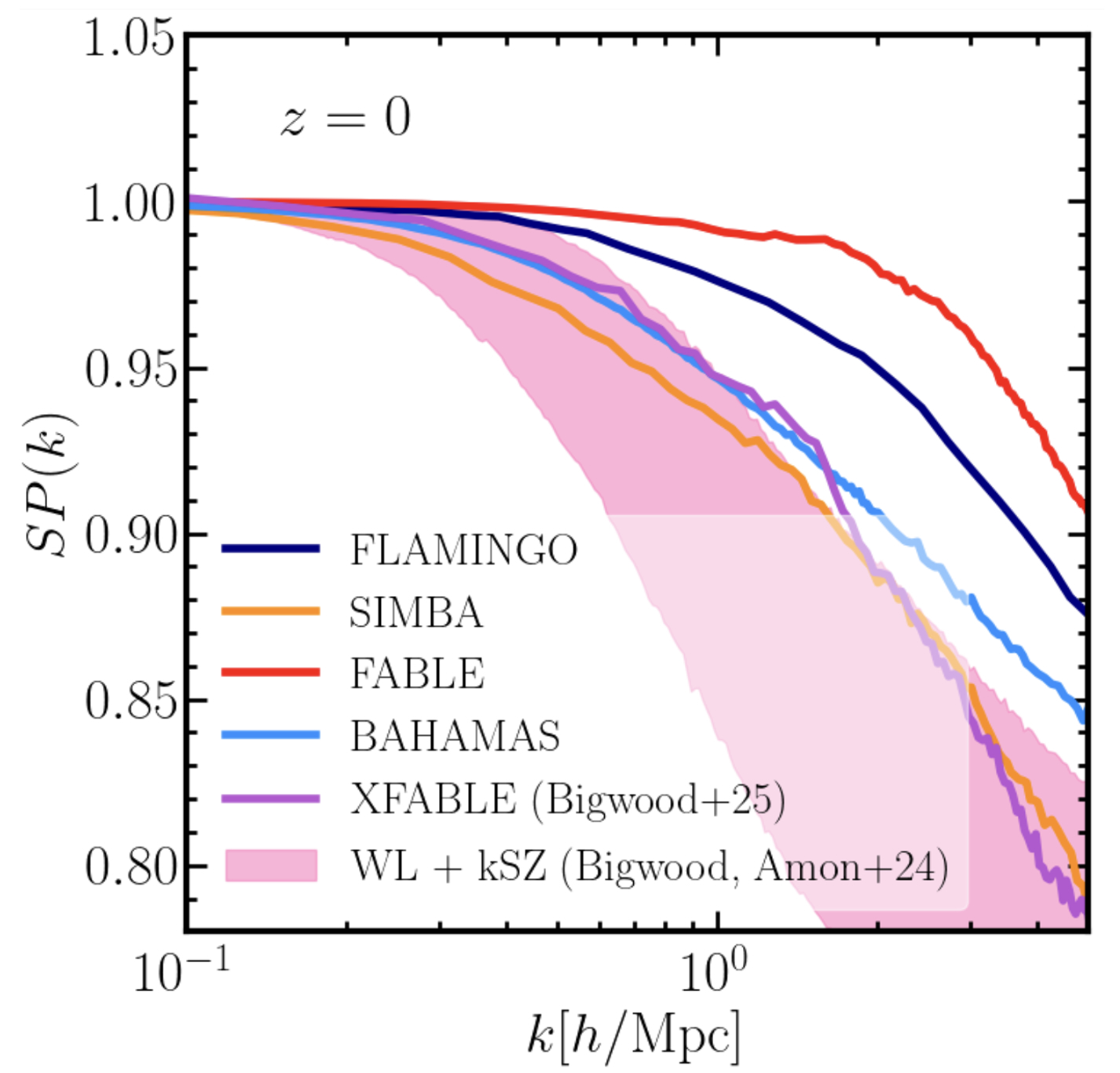
The case for large-scale AGN feedback in galaxy formation simulations: insights from XFABLE
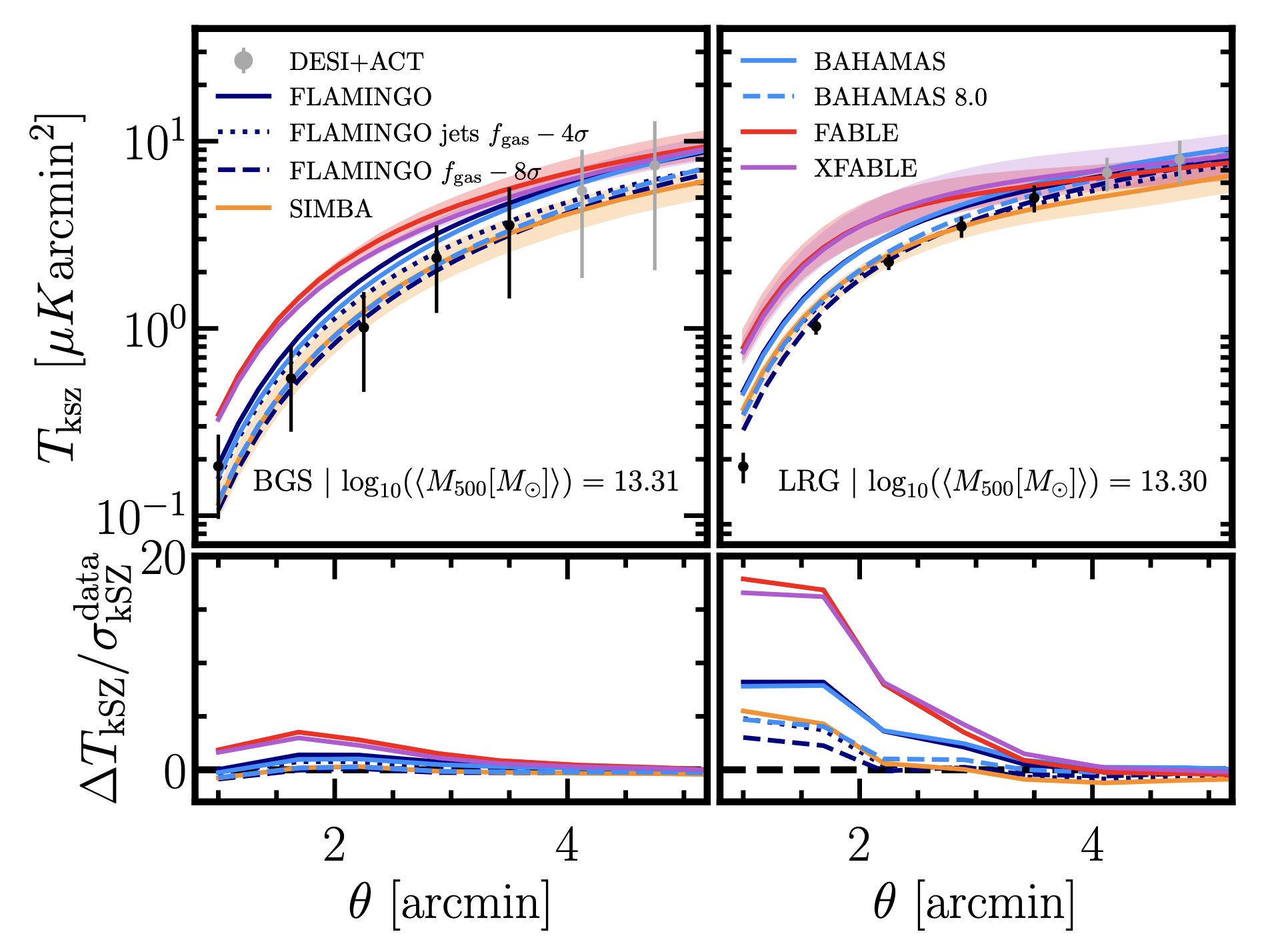
The kSZ effect as a benchmark for AGN feedback models in hydrodynamical simulations: insights from DESI + ACT